ChatGPT vs Claude: Which AI Wins in 2026?
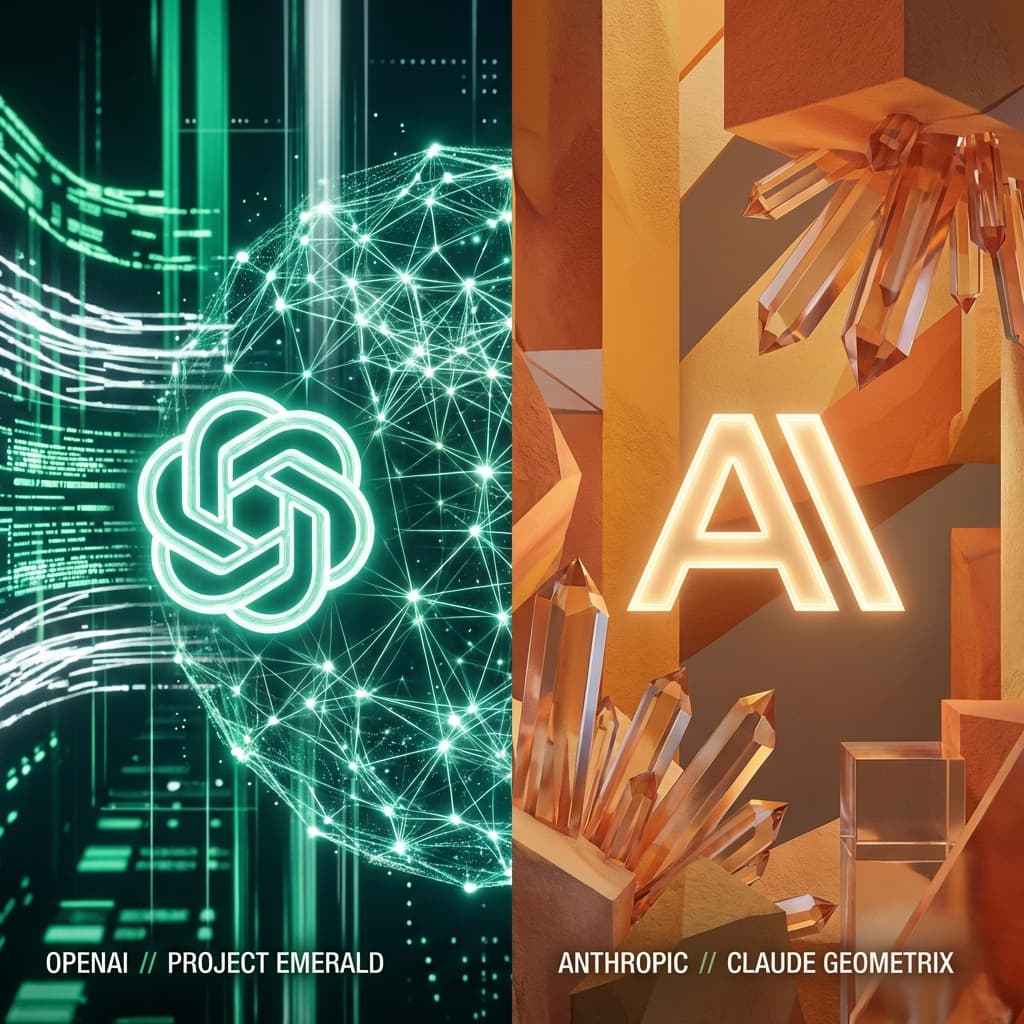
ChatGPT and Claude are the assistants most people reach for first. Both are excellent generalists, and in 2026 both are backed by brand-new frontier models. The right pick depends on what you do most — so let's start with what actually shipped this year, then match it to your work.
The 2026 lineup
Both labs moved fast, so a refresher helps. ChatGPT is now led by OpenAI's GPT-6 Astra, announced on September 3, 2026 and billed by OpenAI as "the world's most intelligent and aligned model" — state of the art, in OpenAI's own framing, on computer use, browsing, software engineering, cybersecurity, science, and professional work. It went to a limited set of organizations first, then across ChatGPT Plus, Pro, Business and Enterprise, plus the OpenAI API, Microsoft Azure, and AWS Bedrock. The previous GPT-5.6 family is still available: released in July 2026 in three variants — Sol (that generation's flagship, with an "ultra" mode that delegates subtasks to smaller models), Terra (the balanced default), and Luna (tuned for speed). Claude, meanwhile, is led by Claude Opus 5 — the tier Anthropic tells you to start with for most workloads — with Claude Fable 5.1 above it as the escalation tier for demanding reasoning and long-horizon agentic work, Claude Sonnet 5 (released June 2026) as the fast, capable default for Free and Pro users, and Claude Haiku 4.5 as the fastest tier. Anthropic's previous generation, Opus 4.8 and earlier, is still available for those who want it.
Writing & long documents
Claude has a long-standing reputation for natural, controlled prose and remains a favorite for long-form writing, editing, and working with big documents thanks to its large context window. Sonnet 5 keeps that everyday polish, and Fable 5.1 pushes it further on nuance and instruction-following. If you paste in a full report or a long thread and ask for a careful, faithful rewrite, Claude tends to hold the thread better.
Ecosystem & everyday tasks
ChatGPT has the broadest ecosystem — custom GPTs, a huge app and plugin surface, image generation, voice, and deep integrations. Alongside GPT-5.6, OpenAI also launched ChatGPT Work, an enterprise-focused workspace built for business use. For "do a bit of everything in one place," ChatGPT is still hard to beat.
Coding
Both are strong coding partners. OpenAI positions GPT-6 Astra as state of the art on software engineering, and reports it scoring 64.6% against Claude Fable 5.1's 52.6% on Terminal-Bench Science 0.1 at an estimated API cost roughly 31% lower — a vendor-run comparison, so treat it as a starting point rather than a verdict. The older GPT-5.6 Sol is still a capable coding model: OpenAI has said Sol at maximum reasoning used 54% fewer output tokens than the next-highest-scoring model on the third-party Artificial Analysis Coding Agent Index — note that the comparison there is against a rival model on that index, not against OpenAI's own earlier releases. Claude Opus 5 is equally at home reviewing large diffs, explaining unfamiliar code, and reasoning across a big codebase without losing the thread. Many developers keep both open: one for quick generation, one for careful review and explanation. If you only want one, run the same real task in each and keep the winner — our GPT-5.6 vs Claude Fable 5.1 comparison covers how the two families differ by design, and gives you a repeatable method for testing them on your own codebase.
Context windows & memory
Both handle large inputs comfortably now, but they lean different ways. Claude's long-context handling remains a headline strength — paste in a sprawling module, a long contract, or a book chapter and it tends to keep details straight across the whole thing. ChatGPT counters with persistent memory across conversations plus its broader tool surface, so it can pull in files, browse the web, and run code as part of a single session. If your work is "reason carefully over one big document," lean Claude; if it's "juggle many tools and remember me over time," lean ChatGPT.
Voice, images & multimodal
ChatGPT is the more complete multimodal product for most people: native image generation, an advanced voice mode you can talk to hands-free, and vision that reads screenshots, diagrams, and whiteboard photos well. Claude is a capable vision model too and is excellent at reasoning over images and PDFs, but ChatGPT's consumer-facing multimodal features are simply broader. If generating images or speaking to your assistant matters, ChatGPT has the edge; if you mostly work in text, it's a wash.
Tone & reliability
Personality is subjective, but the patterns hold. Claude is often described as more measured and careful, with a writing voice many find more natural for long prose and less prone to filler. ChatGPT is more eager and flexible, and its willingness to just attempt a task can be either a feature or a source of over-confident answers, depending on how you prompt it. Both hallucinate far less than a year ago; both still need a human check on anything that actually matters.
Pricing
For consumers, both charge around $20/month for their Pro/Plus tiers. The bigger differences show up in API pricing, which matters if you're building on top of them:
| ChatGPT (OpenAI) | Claude | |
|---|---|---|
| Flagship model | GPT-6 Astra | Claude Opus 5 (Fable 5.1 above it) |
| Default fast model | GPT-5.6 Terra / Luna | Claude Sonnet 5 |
| Consumer plan | ~$20/mo (Plus) | ~$20/mo (Pro) |
| API flagship (per 1M in/out) | $10 / $50 (GPT-6 Astra) | Opus 5: $5 / $25 |
| Cheapest API tier | GPT-5.6 Luna (repriced — check OpenAI) | Haiku 4.5: $1 / $5 |
| Enterprise | ChatGPT Work | Claude for Work / Team |
| Best for | All-rounder, integrations, coding | Writing, editing, long-context reasoning |
Note that Claude Sonnet 5's API rate is $2/$10 per million tokens — worth factoring in if you're planning a build around it. On the OpenAI side, the GPT-5.6 tiers have been repriced since launch: OpenAI announced an 80% cut to Luna and a 20% cut to Terra on July 30, 2026, and a further cut of more than 20% to Sol API and credit pricing from August 21, 2026, running for three months. Its published price table hasn't consistently reflected those changes, so check OpenAI's pricing page for the current numbers before you budget.
Research
For cited, up-to-date research specifically, a dedicated tool like Perplexity often beats both — see our ChatGPT vs Perplexity comparison for when to use which.
Free tiers & getting started
Both let you start for nothing. ChatGPT's free tier gives you access to a capable model with usage limits, and Claude's free tier runs on Sonnet 5 — genuinely strong for everyday work. That makes the "which is better" question easy to settle for yourself: sign in to both, run a week of your actual tasks through each, and notice which one you instinctively reach for. Subscriptions (~$20/month) mainly buy higher limits, priority access to the flagship models, and heavier features like advanced voice or bigger context windows. Most people know their pick within a few days of real use.
Bottom line
- Claude (Sonnet 5 for everyday, Opus 5 for the hardest work, Fable 5.1 when that still isn't enough) for writing, editing, and long-context reasoning.
- ChatGPT (GPT-6 Astra) for the widest ecosystem, integrations, and all-rounder convenience.
Both have generous free tiers — the honest answer is to try each on your real work for a week. Explore more options in our best AI assistants guide, or see where an assistant fits alongside an editor and app builder in the best AI tools for vibe coding.
Frequently asked questions
Is ChatGPT or Claude better for coding?
Both are strong, and many developers keep both open — one for quick generation, one for careful review. OpenAI positions GPT-6 Astra as state of the art on software engineering and reports it scoring 64.6% against Claude Fable 5.1's 52.6% on Terminal-Bench Science 0.1, at an estimated API cost roughly 31% lower — a vendor-run comparison, so treat it as a starting point. The older GPT-5.6 Sol is still capable: OpenAI has said Sol at maximum reasoning used 54% fewer output tokens than the next-highest-scoring model on the third-party Artificial Analysis Coding Agent Index, a comparison against a rival model on that index rather than against OpenAI's own earlier releases. Claude Opus 5 is equally at home reviewing large diffs, explaining unfamiliar code, and reasoning across a big codebase without losing the thread.
Which is better for writing and long documents?
Claude. It has a long-standing reputation for natural, controlled prose and handles long documents well thanks to its large context window. Sonnet 5 keeps that everyday polish and Fable 5.1 pushes further on nuance and instruction-following, so if you paste in a full report and ask for a faithful rewrite, Claude tends to hold the thread better.
Which models power ChatGPT and Claude in 2026?
ChatGPT is led by OpenAI's GPT-6 Astra, announced September 3, 2026 and described by OpenAI as its most intelligent and aligned model, rolled out across ChatGPT Plus, Pro, Business and Enterprise as well as the OpenAI API, Azure, and AWS Bedrock. The earlier GPT-5.6 family, released in July 2026, is still available: Sol (that generation's flagship, with an "ultra" mode that delegates subtasks to smaller models), Terra (the balanced default), and Luna (tuned for speed). Claude is led by Claude Opus 5, which Anthropic recommends as the starting point for most workloads, with Claude Fable 5.1 above it for demanding reasoning and long-horizon agentic work, Claude Sonnet 5 — released June 2026 — as the fast default for Free and Pro users, and Claude Haiku 4.5 as the fastest tier. The previous generation, Opus 4.8 and earlier, is still available.
How much do ChatGPT and Claude cost?
For consumers both charge around $20/month for their Pro/Plus tiers. The bigger differences are in API pricing: GPT-6 Astra runs $10/$50 per million input/output tokens, while Claude Opus 5 runs $5/$25 and Claude Sonnet 5 $2/$10. OpenAI has announced repeated price cuts to the older GPT-5.6 tiers without consistently updating its published price table, so check OpenAI's pricing page for those before you budget.
Are the free tiers good enough?
For most everyday work, yes. ChatGPT's free tier gives you a capable model with usage limits, and Claude's free tier runs on Sonnet 5. Subscriptions mainly buy higher limits, priority access to the flagship models, and heavier features like advanced voice or bigger context windows.
Should I pay for both?
Only if you regularly hit limits on one. A practical split is Claude for writing, editing, and long-context reasoning, and ChatGPT for integrations, multimodal work, and all-rounder convenience. Run a week of your actual tasks through each free tier first — most people know which one they instinctively reach for within a few days.